Why I Trust — and Question — Solana’s Explorer Landscape (A Practical Look at solscan)

Okay, so check this out—I’ve been poking around Solana explorers for years. Wow! My first impression was simple: fast, shiny, no fuss. Really? At first glance everything looked smooth. But then I started chasing transactions late at night and somethin’ felt off…
Whoa! The pace on Solana is intoxicating. Short blocks, lots of activity. But speed alone doesn’t tell the whole story. Initially I thought explorer UIs were interchangeable, but then I realized differences matter — in UX, indexing clarity, and how analytics surface on-chain intent. On one hand explorers are raw windows into ledger state; on the other hand they shape what we believe about activity, trends, and risk. My instinct said trust, though actually wait—let me rephrase that: trust must be earned.
When you land on an explorer you want three things. First, reliability — show me correct data. Second, context — help me understand what’s happening and why. Third, tools — filters, protocol metadata, token views. Hmm… I kept finding partial solutions. Some explorers are great at block-level telemetry but weak on token histories. Others have slick dashboards but miss edge cases when forks or replay protection occur. I’m biased, but those gaps bug me.
Why solscan often becomes my go-to
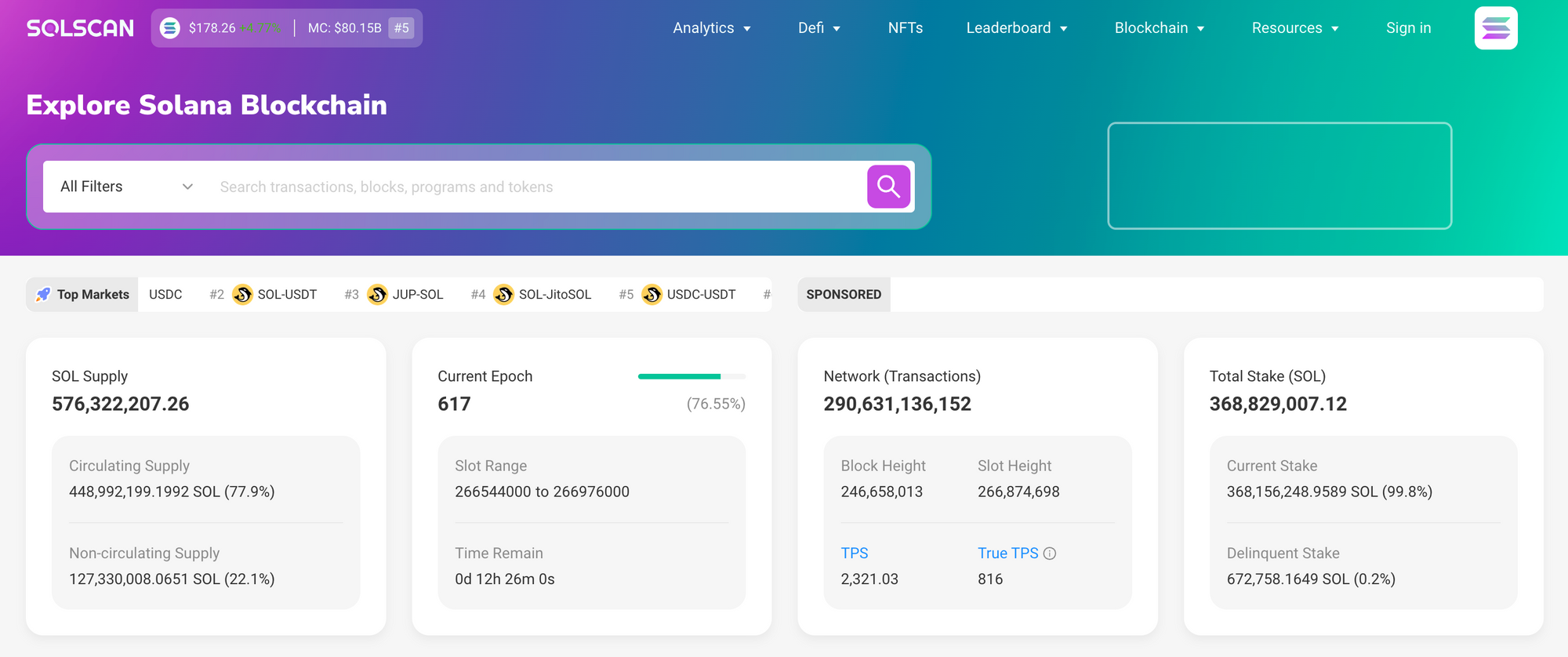
I use different explorers, though solscan tends to be the one I recommend to colleagues. Seriously? The reason is practical: it balances raw data and approachable analytics without pretending to be a full analytics platform. Check it out: solscan. Its layout makes it easy to trace token movement, parse transaction instructions, and spot big wallet patterns. But let’s not pretend it’s perfect — it misses niche metadata at times and can be slow during cluster congestion.
Here’s the thing. For routine checks — transaction confirmations, token transfers, NFT mints — a clean UI wins. Wow! solscan gives quick searchable indexes and clear token pages. Medium-level analysis like token holders distribution and top transfers comes built-in, which saves time. Longer, deeper investigations that involve cross-protocol flows still need dedicated analytics tooling or custom queries. On the technical side, solscan indexes RPC data and builds auxiliary caches, and that approach usually works; though when RPC nodes lag, the derived views can lag too, which is annoying.
On one hand explorers must be resilient against spam and malformed transactions. On the other, they should surface unusual activity clearly. My experience shows that solscan does a decent job flagging errant transactions and showing instruction breakdowns for common programs like SPL Token, Serum, and Metaplex. Something about the presentation feels pragmatic — not over-embroidered. Yet actually, in complex cross-program interactions, the instruction trace can be hard to follow unless you dig into raw logs.
Fun aside: I’m a sucker for neat graphs. Seriously? Solscan’s token charts and quick holder concentration graphs are handy for a mental model. But don’t mistake them for rigorous on-chain econometrics. They give you a sense, not a thesis. Initially I used those charts to validate hypotheses, but then I realized sampling differences between explorers can produce divergent narratives. So double-check, always double-check.
Let me walk through a real workflow I use. First, I search the tx signature. Wow! Then I read the top-level details. Medium: I scan slot number, fee payer, and program instructions. Longer: I then dive into inner instructions and program logs, trying to map program calls to state changes, which sometimes requires decoding binary data or following program-specific docs. This split between quick confirmation and deep forensics is where explorers diverge most — and where solscan usually sits comfortably in the middle, delivering both speed and sufficient depth.
There are clear trade-offs. Some explorers prioritize high-frequency updates at the cost of occasional inconsistencies. Others are conservative and slow but highly reliable. My instinct was to want both. On one hand speed is crucial for traders and bots. On the other hand auditors and security researchers demand determinism and reproducibility. So what’s the sweet spot? In practice you pick the tool that aligns with the job.
For developers building on Solana, instrumentation matters. Wow! Detailed program metadata, instruction decoding, and good error messages save hours. solscan’s decoded instruction view for major programs is a major timesaver. Medium sentence here: it reads human-friendly names instead of raw program IDs. Longer thought: but when dealing with custom on-chain programs or newly deployed contracts, you’ll still need to wire in your own ABI decoding or rely on source-level docs to make sense of the binary payloads, which the explorer can’t invent for you.
Sometimes explorers amplify narratives. Seriously? Big transfers look dramatic on a dashboard, but context is missing if you don’t trace where tokens came from and who ultimately controlled the destination accounts. For example, a “whale move” might just be rebalancing between wallets owned by the same entity, or a wrapped token conversion that doesn’t change economic exposure. solscan provides clues — token holder tables, associated addresses — but interpretation remains a human task. I’m not 100% sure about automated heuristics, though I’d trust a well-documented methodology more than black-box labeling.
Another practical note: watch out for cluster-specific behaviors. Wow! Mainnet-beta and testnets differ in performance and spam noise. Medium: some explorers provide toggles or indicators for cluster health. Longer: when cluster congestion spikes, explorers reliant on public RPC endpoints can show stale or partial data, which misleads nontechnical observers into thinking transactions failed or that network activity suddenly dipped, when in reality telemetry lag is the culprit.
Security researchers — my tribe — care about provenance. Seriously? Being able to drill into token mint authorities, freeze states, and program upgrade keys is essential. solscan surfaces many of those fields, which makes preliminary triage effective. But there’s subtlety: program upgrade authorities can be multisigs, and on-chain keys alone don’t reveal off-chain governance constraints. So explorers give you starting points, not full provenance chains.
One thing that bugs me is inconsistency between explorers on derived metrics like “holders” or “transfer counts.” Wow! Different indexing windows or heuristics produce different numbers. Medium: solscan documents its approach, but you still need to reconcile its method with others before making claims. Longer thought with a caveat: if you’re doing tokenomics research or preparing investor-facing analysis, build reproducible pipelines that use consistent index snapshots rather than relying on live explorer metrics alone, because live metrics can shift as reorgs resolve or as indexing finishes.
Practical tips for using explorers effectively
Short checklist first. Wow! Save signature IDs. Verify program IDs. Cross-check timestamps. Medium: use multiple explorers when things look weird. Longer: export logs and, when possible, run a local RPC node or query archival providers to reproduce events exactly, instead of trusting a single UI’s interpretation.
When to use solscan vs. other tools. Seriously? Use solscan for quick triage and readable instruction decoding. Use dedicated analytics for cohort analyses or for querying billions of events. Use on-chain archival queries when you need absolute fidelity. Initially I preferred UI-first workflows, but then I realized for reproducible research you need raw data and a scriptable stack.
FAQ
Is solscan safe to use for transactions and wallet checks?
Yes — it’s a read-only explorer, so you don’t sign anything there. Wow! It helps you inspect transactions and token history. Medium: always ensure you’re not entering keys or sensitive data into any explorer. Longer: for added safety, confirm transactions via your wallet app and use hardware wallets for high-value operations; explorers are visibility tools, not transaction platforms.
To wrap up (but not in a textbook way), my emotional arc here moved from curiosity to mild frustration, then to pragmatic appreciation. Wow! I still have unanswered questions about how explorers should standardize metrics across the ecosystem. I’m biased toward tools that document their methods. Ultimately, explorers like solscan are indispensable — they make on-chain life visible — but remember they’re one lens among many. Something to keep in mind: don’t let a single dashboard narrate the whole story. Somethin’ tells me the best insight comes from combining careful UIs, reproducible queries, and a skeptical human at the helm…